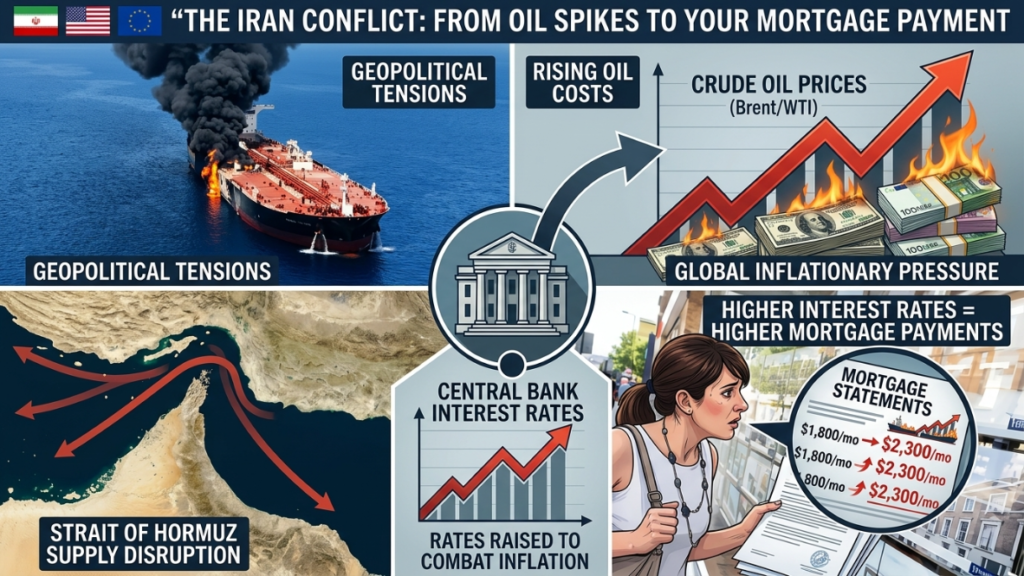
The statement “the Iran war hasn’t just hit oil prices, it’s now inside your mortgage payment” refers to how geopolitical conflicts can spread through the global economy and eventually affect everyday borrowing costs.
Here’s the chain reaction:
- Fighting in and around Iran raises fears about oil supply disruptions, especially near the Strait of Hormuz, a key global energy shipping route. Oil prices have surged as markets worry about supply shortages.
- Higher oil and gas prices increase inflation across the economy. Transportation, food production, manufacturing, airlines, and shipping all become more expensive.
- Investors then expect central banks like the U.S. Federal Reserve, the European Central Bank, and the Bank of England to keep interest rates higher for longer — or even raise them again to fight inflation.
- Bond yields rise globally as markets price in those inflation and rate expectations. Mortgage rates are heavily tied to government bond yields, especially long-term bonds.
- As a result, home loans become more expensive. In several countries, mortgage rates have already climbed noticeably since the Iran conflict intensified.
So even people far from the Middle East can feel the economic effects through:
- higher fuel costs,
- more expensive groceries,
- rising airline prices,
- increased inflation,
- and larger monthly mortgage payments.
Analysts say the conflict is now influencing not just energy markets but the broader global financial system. Reuters and other financial outlets report that rising oil prices and inflation fears are pushing borrowing costs higher worldwide.